I need your help
theeastwestseries.com
Greetings Subscribers!
If you’ve followed my work, you know I’ve spent nearly three decades translating between Eastern and Western Christianity—studying the Latin fathers, Augustine, scholasticism, then finding myself in the Eastern Orthodox Church.
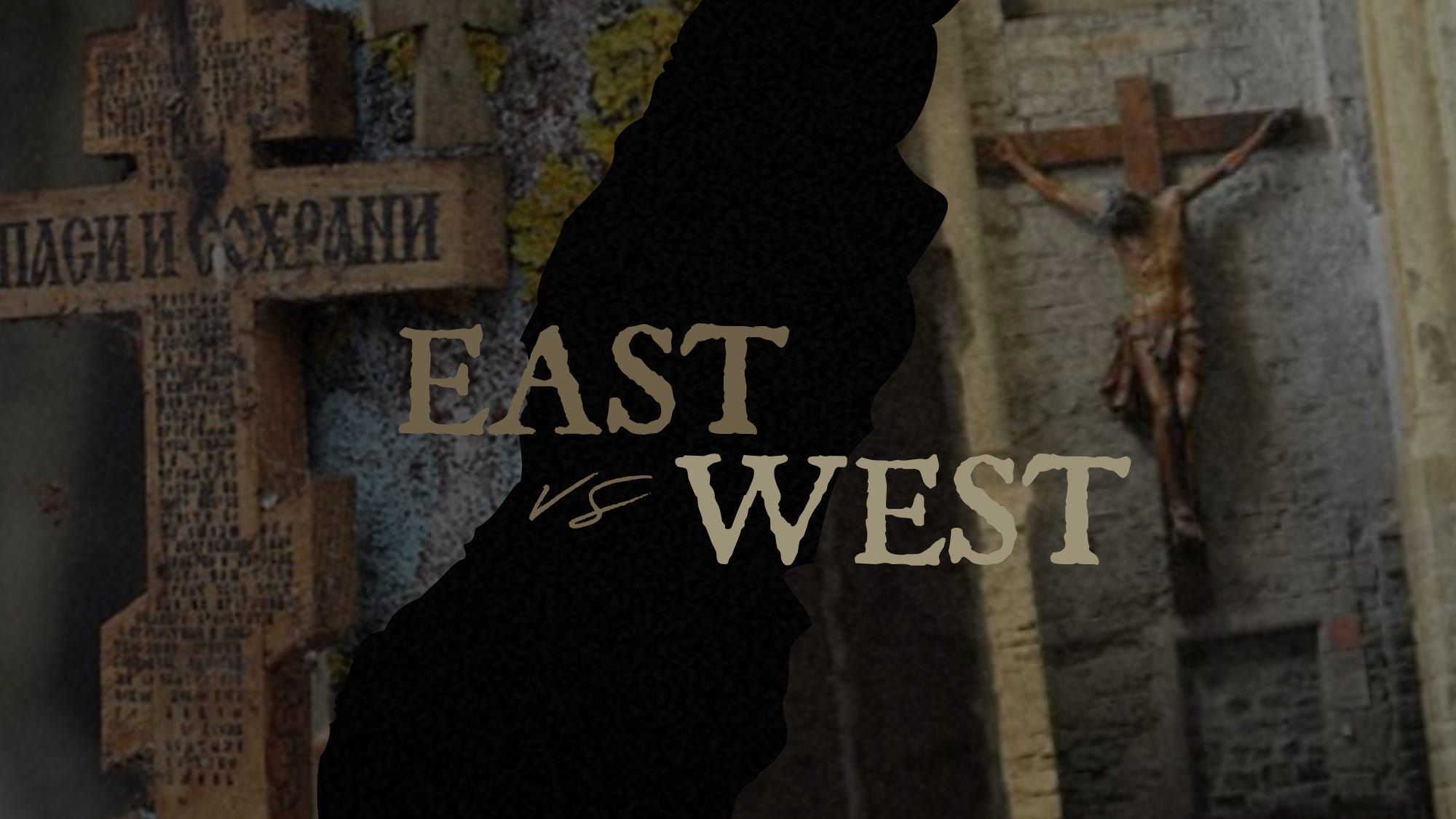
I’m producing a 25-lecture series exploring the fundamental differences between East and West. While I’m already hard at work on production, I need your support to get this across the finish line. We expect to launch Summer 2026.
Why back now?
Get the series at the lowest price it will ever be offered ($97)
Higher tiers include live Q&A sessions, a 14-week live course, and private consultations with me
Be part of bringing this translation work to life
Can’t contribute right now? You can still help by becoming a paid Substack subscriber—you’ll unlock my full archive plus the 15+ hour Orthodox Foundations series.
One more thing: I’ll be posting the first lecture of the series here on Substack, broken up into several parts, starting this Friday. Whether or not you’re able to contribute financially, I hope you’ll follow along.



Dr. Jacobs, hello and may you have a profitable lent!
I think you are making a very valuable and important work not only for those who may consider converting to Orthodoxy, but also for preserving them from being infected with the unorthodox ideas of the heresy of Ecumenism. May God grant you His help to finish this endeavor!
As your work is huge, no wonder you may overlook some inaccuracies in your explanations, so allow me to sound one particular critical concern.
When you are explaning why there are not three Gods, you appeal to the first part of the famous letter of st. Gregory of Nyssa, but usually do not mention the second part (or you make a very short remark on it, without explaining this argument fully). It leaves an impression that God is not very much different from man, because in both cases the only thing that prevents us from saying "three men" or "three Gods" is the fact that the three hypostases have the same essence and we inaccuratly call three hypostases of the same nature "three men" or "three Gods". The problem is that stopping explanation on this argument elliminates the mystery of the Holy Trinity.
When we are saying "three men", we actually mean three separate hypostases and not three different essences (at least in our age), while the mystery of the Holy Trinity teaches us to believe that uncomprehensable superessential essence of God has corresponding hypostases that dwell one in each other and have one will and one energy! This mystery defies our comprehention and contradicts all our creaturely experience.
Exuse me for reminding you this basics of Orthodox faith, but without actually speaking it out your audience may get a wrong impression, learning to believe in the other extreme: while western Christianity fell into conclusion that there are not three hypostases, but only three inner relations of the Divine nature to itself, your partial explanation may lead to believe, that there are "three Gods" in a meaning of three separate hypostases.
I just want to remind you that this is the main concern and such holy fathers as st. John of Damask and st. Fotius of Konstantinopol, who were summorising the whole Orthodox tradition, were speaking primarily about it.
____________________________________________
Now some quotes from their works:
1) St. John of Damask (On the Orthodox faith)
Chapter 8. Concerning the Holy Trinity
We believe, then, in One God ... one essence, one divinity, one power, one will, one energy, one beginning, one authority, one dominion, one sovereignty, made known in three perfect Hypostases and adored with one adoration, believed in and ministered to by all rational creation, united without confusion and divided without separation (which indeed transcends thought).
...
And just as we say that fire has brightness through the light proceeding from it, and do not consider the light of the fire as an instrument ministering to the fire, but rather as its natural force: so we say that the Father creates all that He creates through His Only-begotten Son, not as though the Son were a mere instrument serving the Father's ends, but as His natural and subsistential force. And just as we say both that the fire shines and again that the light of the fire shines, So all things whatsoever the Father does, these also does the Son likewise. (John 5:19)
...
And again we speak of the three Hypostases as being in each other, that we may not introduce a crowd and multitude of Gods. Owing to the three Hypostases, there is no compoundness or confusion: while, owing to their having the same essence and dwelling in one another, and being the same in will, and energy, and power, and authority, and movement, so to speak, we recognise the indivisibility and the unity of God. For verily there is one God, and His Word and Spirit.
(Or in translation from Russian: "And again we say that the three Hypostases are one within the other, lest we introduce a multitude and crowd of gods. Through the three Hypostases we understand the uncomplex and unmerged; and through the consubstantiality and existence of the Hypostases—one within the other, and the identity of will, activity, strength, power, and, so to speak, movement—we understand the indivisibility and existence of the one God. For truly there is one God, God, and His Word, and His Spirit".)
Concerning the distinction of the three Hypostases: and concerning the thing itself and our reason and thought in relation to it.
One ought, moreover, to recognise that it is one thing to look at a matter as it is, and another thing to look at it in the light of reason and thought. In the case of all created things, the distinction of the hypostasesis observed in actual fact. For in actual fact Peter is seen to be separate from Paul. But the community and connection and unity are apprehended by reason and thought. For it is by the mind that we perceive that Peter and Paul are of the same nature and have one common nature. For both are living creatures, rational and mortal: and both are flesh, endowed with the spirit of reason and understanding. It is, then, by reason that this community of nature is observed. For here indeed the hypostases do not exist one within the other. But each privately and individually, that is to say, in itself, stands quite separate, having very many points that divide it from the other. For they are both separated in space and differ in time, and are divided in thought, and power, and shape, or form, and habit, and temperament and dignity, and pursuits, and all differentiating properties, but above all, in the fact that they do not dwell in one another but are separated. Hence it comes that we can speak of two, three, or many men.
And this may be perceived throughout the whole of creation, but in the case of the holy and superessential and incomprehensible Trinity, far removed from everything, it is quite the reverse. For there the community and unity are observed in fact, through the co-eternity of the Hypostases, and through their having the same essence and energy and will and concord of mind, and then being identical in authority and power and goodness — I do not say similar but identical — and then movement by one impulse. For there is one essence, one goodness, one power, one will, one energy, one authority, one and the same, I repeat, not three resembling each other. But the three Hypostases have one and the same movement. For each one of them is related as closely to the other as to itself: that is to say that the Father, the Son, and the Holy Spirit are one in all respects, save those of not being begotten, of birth and of procession. But it is by thought that the difference is perceived. For we recognise one God: but only in the attributes of Fatherhood, Sonship, and Procession, both in respect of cause and effect and perfection of Hypostasis, that is, manner of existence, do we perceive difference. For with reference to the uncircumscribed Deity we cannot speak of separation in space, as we can in our own case. For the Hypostases dwell in one another, in no wise confused but cleaving together, according to the word of the Lord, I am in the father, and the father in Me (John 14:11): nor can one admit difference in will or judgment or energy or power or anything else whatsoever which may produce actual and absolute separation in our case. Wherefore we do not speak of three Gods, the Father, the Son, and the Holy Spirit, but rather of one God, the holy Trinity, the Son and Spirit being referred to one cause, and not compounded or coalesced according to the synæresis of Sabellius. For, as we said, they are made one not so as to commingle, but so as to cleave to each other, and they have their being in each other without any coalescence or commingling. Nor do the Son and the Spirit stand apart, nor are they sundered in essence according to the diæresis of Arias. For the Deity is undivided among things divided, to put it concisely: and it is just like three suns cleaving to each other without separation and giving out light mingled and conjoined into one. When, then, we turn our eyes to the Divinity, and the first cause and the sovereignty and the oneness and sameness, so to speak, of the movement and will of the Divinity, and the identity in essence and power and energy and lordship, what is seen by us is unity. But when we look to those things in which the Divinity is, or, to put it more accurately, which are the Divinity, and those things which are in it through the first cause without time or distinction in glory or separation, that is to say, the Hypostases of the Son and the Spirit, it seems to us a Trinity that we adore. (Or in translation from Russian: then there will be Three [Persons] Whom we worship.)
to be continued...
How can I buy this course from Russia? I have been trying to get a subscription, but there was no available way of paying. We are placed here under a collective responsibility...